An inactivating ingredient is a chemical that is used to till the virus or weaken toxins during the manufacturing stage, the virus or toxin is then clean though it is possible that trace amounts of the inactivating agent ends up in the vaccine (3).
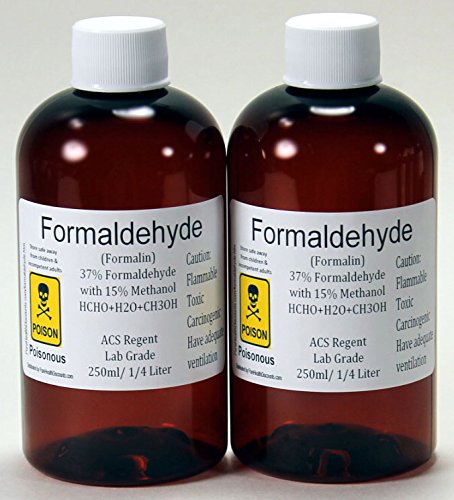
Formaldehyde is used as an inactivating ingredient, and while in large concentrations it can cause DNA damage the amount used in vaccines is minimal as well as diluted. In all of the vaccines combined a child would only maybe receive as much as 0.7 -0.8 mg of formaldehyde. The body experiences much more formaldehyde than that on a daily basis. It is used in the synthesis of DNA, so naturally 2.5ug of formaldehyde can be found in 1ml of blood at any time. So if the child is five kg, that means they would have on average 85ml of blood per Kg. Making the total amount of formaldehyde found in the child's blood to be 1.1mg which is much larger than the amount in all of the vaccines on the CDC schedule combined (2).
 (1)
(1)
Formaldehyde is used as an inactivating ingredient, and while in large concentrations it can cause DNA damage the amount used in vaccines is minimal as well as diluted. In all of the vaccines combined a child would only maybe receive as much as 0.7 -0.8 mg of formaldehyde. The body experiences much more formaldehyde than that on a daily basis. It is used in the synthesis of DNA, so naturally 2.5ug of formaldehyde can be found in 1ml of blood at any time. So if the child is five kg, that means they would have on average 85ml of blood per Kg. Making the total amount of formaldehyde found in the child's blood to be 1.1mg which is much larger than the amount in all of the vaccines on the CDC schedule combined (2).
(1)
1Amazon.com: Online Shopping for Electronics, Apparel ... (n.d.). Retrieved May 2, 2020, from https://www.amazon.com/
2Children's Hospital. (2014, November 7). Thimerosal. Retrieved May 2,
2020, from
https://www.chop.edu/centers-programs/vaccine-education-center/vaccine-ingredients/thimerosal
3Vaccines: Vac-Gen/Additives in Vaccines Fact Sheet. (2019, August 5).
Retrieved May 2, 2020, from
https://www.cdc.gov/vaccines/vac-gen/additives.htm
