The meningococcus vaccine was originally a polysaccharide vaccine but due to low immunity levels in young children it was switched to a conjugate vaccine with is highly immunogenic. There are two single component vaccines one was approved in 2005 and the other was approved in 2010. They both contain strains A, C, W, Y. The polysaccharide vaccine does not cause an immune response in children under the age of 18 months old. The vaccine that was approved in 2005 is proven to be effective for at least 10 years which gives protection when the person is most at risk for the disease. The second vaccine approved in 2010 is primarily used a booster for people who have long term risks in getting the infection (2).
If vaccinations ended, there would be an increase in children and adolescents with the disease even though communicability is low, there would be no way to eradicate the disease if vaccinations were to stop (2).
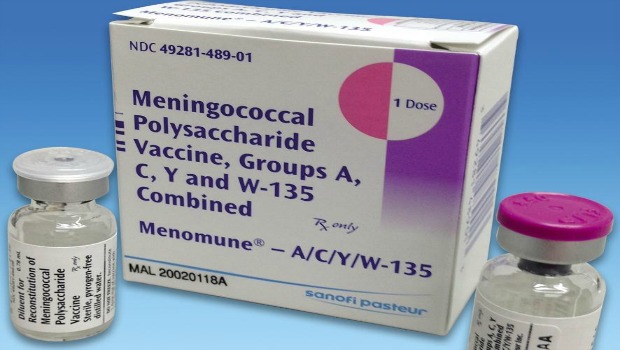 (1)
(1)
1Admin. (2019, February 28). Meningococcal (MPSV4-Menomune). Retrieved
May 2, 2020, from
https://vaccineingredients.net/vaccines/meningococcal-mpsv4-menomune
2Pinkbook. (2019, April 15). Retrieved May 2, 2020, from https://www.cdc.gov/vaccines/pubs/pinkbook/mening.html
