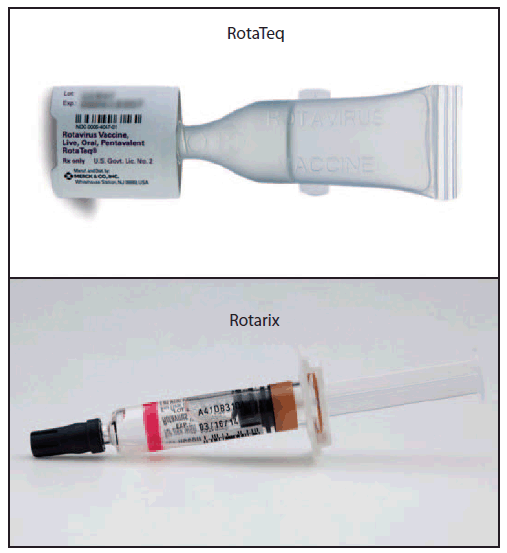
An infection of rotavirus leads to a large amount of viral shedding in the infected person's stool. If that comes in contact with the water the infection can easily be spread to others. There are two vaccines available in the U.S. market currently. In 2006, the live oral vaccine RV5 was approved for market. RV5 carries five reassortmant strains from both human and bovine infections. It was found that 9% of infants shed virus after the first dose of the vaccine, and 0% of them shed virus after dose two and three. The other vaccine is the RV1 is another live oral vaccine, that was approved for market in 2008, and contains only one live attenuated strain of human rotavirus. After the first dose of the RV1 50%-80% of the infants shed virus in their stool, after dose two viral shedding decreases to 8% - 14% of infants, thirty days after the second dose viral shedding occurs in 1.2% of infants (2).
Studies have found that the rotavirus vaccine is 98% effective against severe rotavirus infections, and 74% effective against any severity of infection. The length of immunity is unknown, though it has been showed to keep high effectiveness for at least three years. If vaccinations stopped, it would cause a resurgence of the disease and those who have gotten infected would not be considered immune. Which would lead to a second or third time infected with the same virus (2).
 (1)
(1)
1Notes from the Field: Rotavirus Vaccine Administration Errors - United
States, 2006–2013. (n.d.). Retrieved May 2, 2020, from
https://www.cdc.gov/mmwr/preview/mmwrhtml/mm6304a4.htm
2Pinkbook. (2019, April 15). Retrieved May 2, 2020, from https://www.cdc.gov/vaccines/pubs/pinkbook/rota.html
